June 2018

Women directors

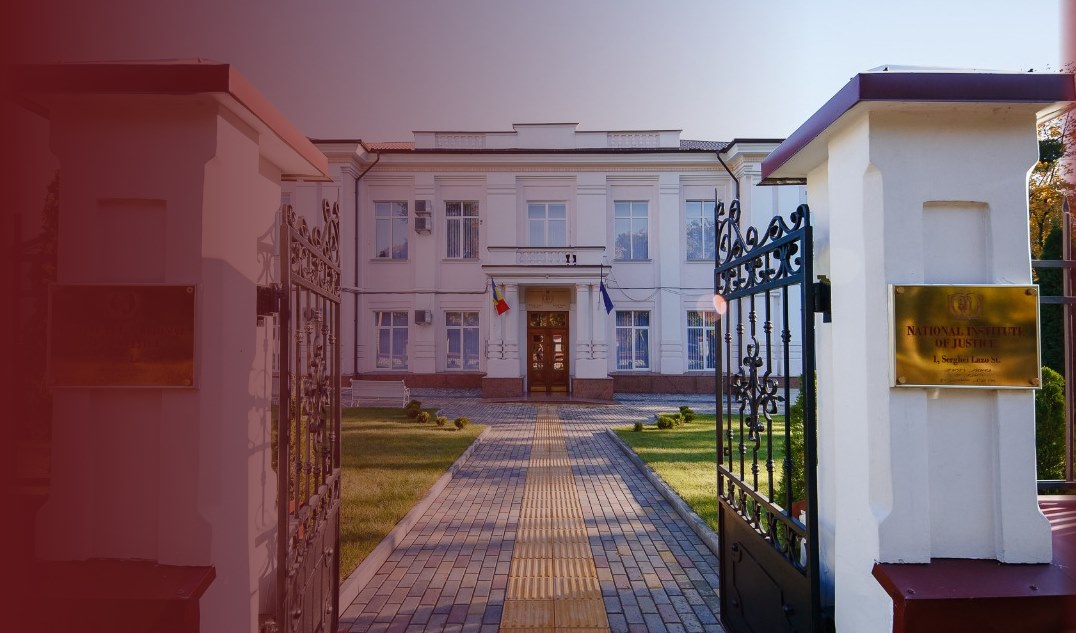
Women who administrated the institutions which used the premises at 1, Serghei Lazo Street 


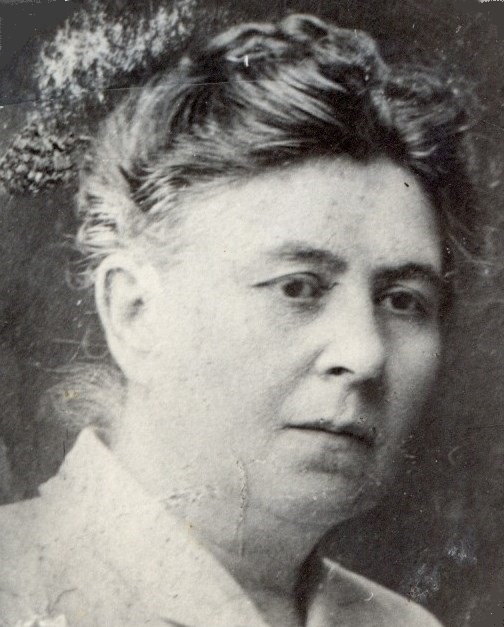
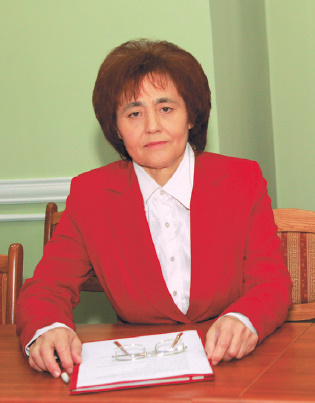
Nadejda TERLEȚKI. She studied pedagogy with a lot of commitment and sacrifice. Between the period of 1917-1925 she was the director of Chisinau Primary School No. 5 (which was located at the premises on 1 Serghei Lazo Str.) and a lot of generations of children benefited from her professor’s talent and exceptional soulfulness. She participated at various congresses in Russia where her oratorical skills and public hearings talent had been fully demonstrated.


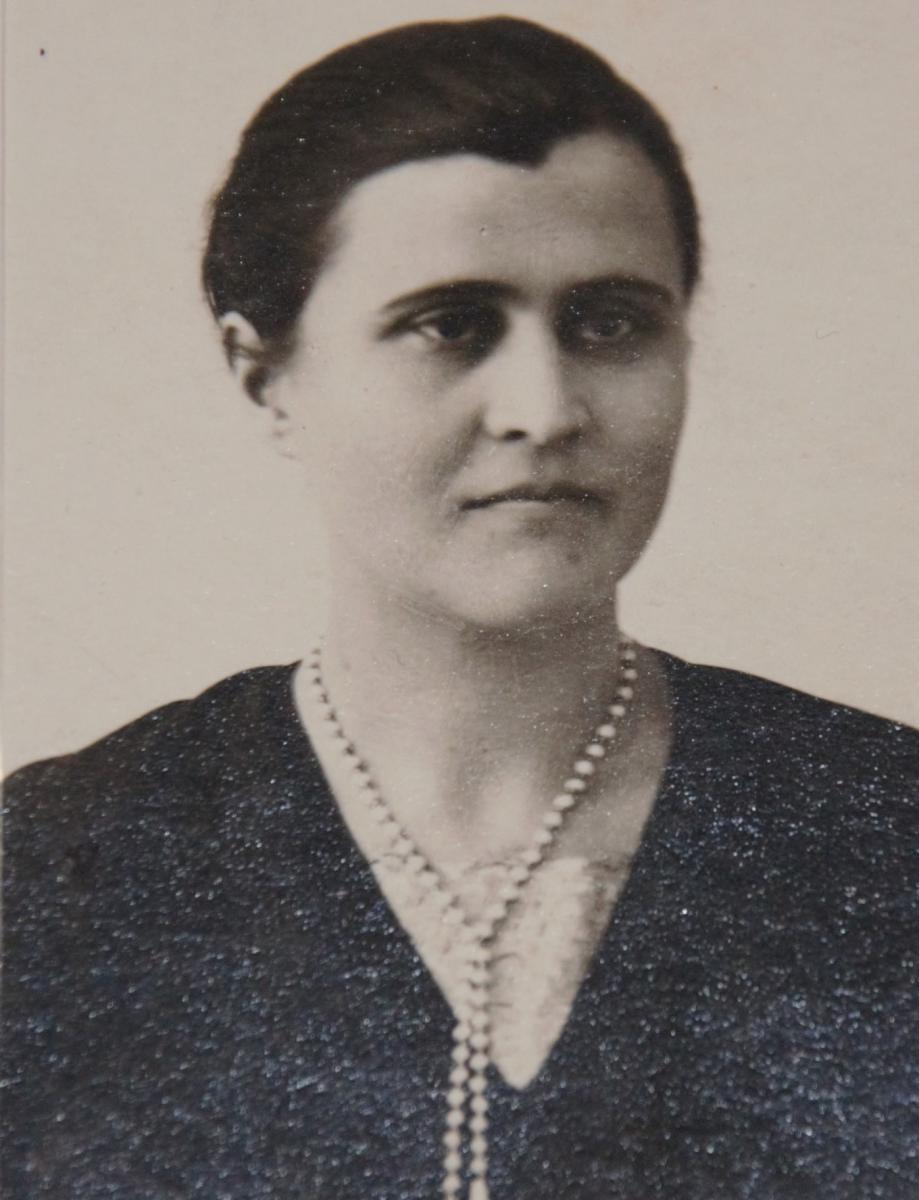
Alexandra REMENCU. She was a teacher, principal of the kindergarten (no. 17) in Chisinau. In 1929, on the proposal of Florica Nita, she is named the headmistressof Orphanage (later – Children’s House) of Chisinau. In 1940, the Children’s House became amodel-Orphanagefor the entire country, being visited by a special commission of the Nations League (1938). The chief of the commission, Montessori, has proposed that the experience of this orphanage to be presented at a special congress that took place in Rome (1938). The theses of the report submitted at the congress by Alexandra Remencu were included in the final stage as recommendations. In the same year, she was invited to Vatican where she was welcomed by the Pope Pius XI.


Eugenia FISTICAN. Eugenia FISTICAN was appointed, on a competition basis, to the position of the executive director of the NIJ for a period of 5 years pursuant to Decision of the Council of the NIJ No 1/3 of 17 October 2006, being seconded, based on the Decision of the Supreme Council of Magistrates from the position of the judge of the Supreme Court of Justice. In 2008 for merit service she was granted Meritul Civil medal, while in 2015 honorific title „Veteran al sistemului judiciar”.


Anastasia PASCARI (1947–2014). Anastasia PASCARI was appointed, on a competition basis, to the position of the executive director of the NIJ for a period of 5 years pursuant to Decision of the Council of the NIJ No 16/4 of 3 January 2011, being seconded, based on the Decision of the Supreme Council of Magistrates from the position of the judge of the Supreme Court of Justice.  For merit service she was granted Meritul Civil and Gloria Muncii Medals. She was also holding the honorific titles of „Decan al autorităţii judecătoreşti”, „Veteran al sistemului judiciar” and others.


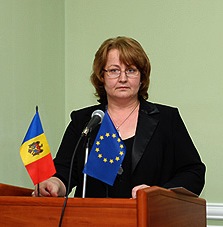
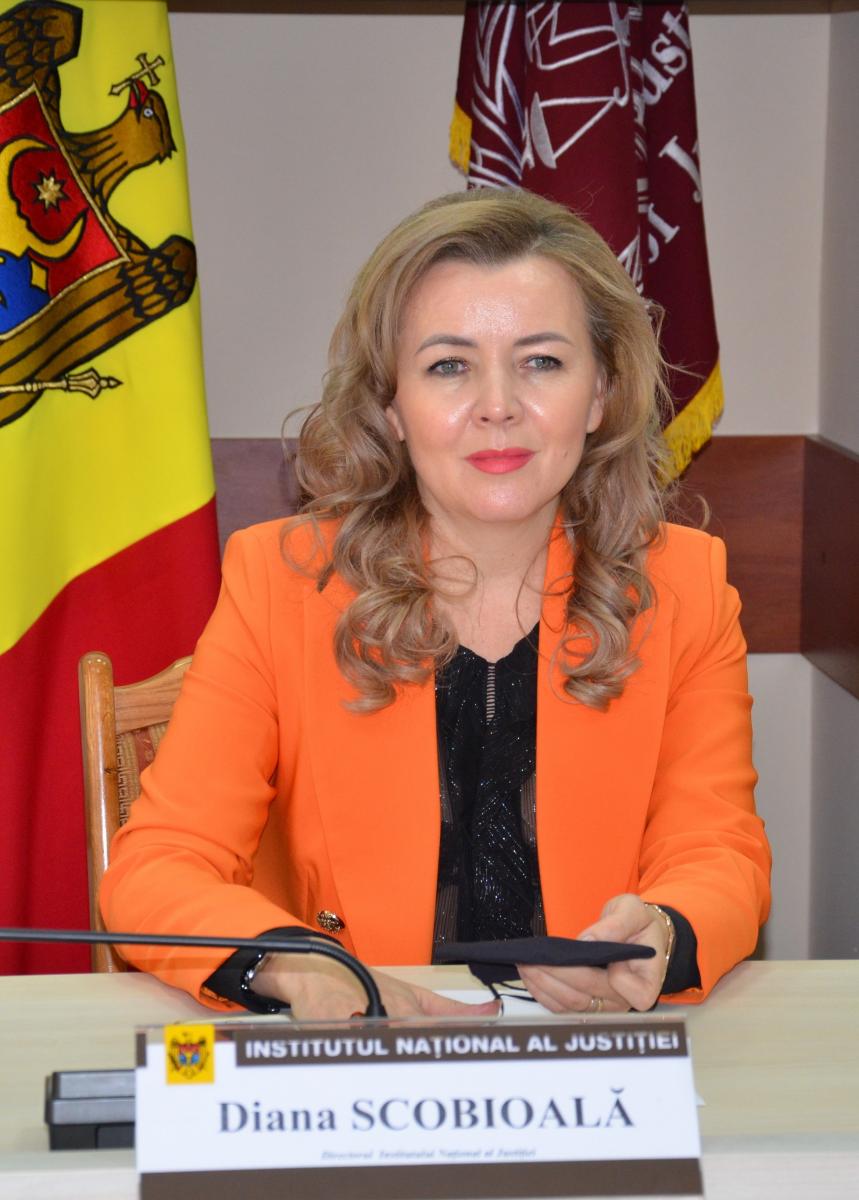
Diana SCOBIOALA, university professor, doctor habilitatus in international law, author and co-author of over 80 scientific and methodological-didactic publications. Appointed on a competition basis by the Council of the NIJ, she held two terms as a director of the NIJ (February 2015-February 2020; March 2020-November 2021, incomplete). In September 2021, the Council of Europe Parliamentary Assembly (PACE) elected Diana Scobioala as judge to the European Court of Human Rights in respect of the Republic of Moldova.

Orphan Asylum of European Class

Chisinau Had the Best Orphan Asylum in Europe in the 1930-ies


Bessarabian Inhabitants in the WWI fields

Bessarabia became a front-line province in autumn 1916. But till that moment, our fellow countrymen had been fighting and dying in the Galician fields. Tens of thousands of Bessarabian inhabitants entrenched beyond the Siret river. Their fathers became volunteers in the strings of army carts. They brought foodstuffs and munitions there and coffins and wounded people back. Hundreds of high-school girls became nurses and tens of Chisinau high schools were assigned to the military departments to serve as command units and hospital, until the war ended.

The front was stabilised and there was carried on the trench war. The severest battles were conducted near the township of Meresesti.

Namely it was the place where the two heroes of our story – the priest Alexei Mateevici and the young officer Dmitri Remenco, a son of a Bulgarian notary – met. Alexei’s father having the rank of interim padre encouraged the soldiers for the feat of arms and read the burial service over the deceased. The front life brought those two fellow countrymen together. There arose close friendship. The young officer Remenco was keen on theology and was dreaming of becoming a philosopher. Later on, he had been the head of the religion journal – Raza – for ten years or so; he also was a famous church journalist. He had been thanking his luck till his dying day that he had been sometimes close to the poet Mateevici.

Once, after philosophic disputes ended, Alexei’s father asked the young officer: ‘Why aren’t you married? By the way, I have a good match for you in view. This is Alexandra Scodigor, a daughter of a priest from Chisinau, from the decent Ilinski Cathedral. She is completing her studies at the Mathematical Faculty in Odessa now’.

Headmistress Madame Scodigor-Remenco Received by the Pope

Soon there came disturbing 1917. The standstill truce was at the front. Mateevici came back home, got an influenza and died in August 1917. But Remenco, when he was in Chisinau, found that very same Alexandra and married her soon. The son Gheorghi was born on them in 1919 and another son Serghei was born 1933. The latter was my university fellow and bosom friend.

The Remencos’ fate was the following. The former officer Dmitri entered the Iasi University, became a journalist and was the head of Raza journal. But madam Alexandra Scodigor-Remenco made absolutely fantastic career. She became the headmistress of the child boarding school located at the end of Kogalniceanu Street (former Pirogov Street). Now there is the Court of Justice. That boarding school combined studies, labour, family settings and intellectual education.

There were several millions of orphans in Europe at that time. The League of Nations started dealing with arrangement of asylums. The person responsible therefor was madam Maria Montessori. She came to Chisinau in the late 1930-ies to find out how the asylums were organized, and became certain that madam Remenco had arranged the best asylum in Europe. So, Remenco was invited to Rome at once and there was organised the seminar on children education at boarding schools. Chisinau served as an example there.

The headmistress held meetings with her European colleagues, visited boarding schools from other countries and shared her experience. She was invited personally by the Pope Pius IX. Alexandra Remenco became a celebrity at once both in Chisinau and throughout Romania.

A Kindred of Pedagogues and Priests

We still have to introduce many personages into this story, so you would be able to understood her career progresses.

In 1890 or so, the seminarians Nita from Peresecina and Scodigor from Ciciuieni studied at Chisinau religious seminary. They were friends. Later on, eight children were born on each of them. Two daughters from the Nita family married two brothers from the Scodigor family, in order to strengthen those ties of friendship. One of such daughters was the mother of named Alexandra. But the other daughter married the headmaster of high school with real profile – the mathematician Ion Scodigor. As a result, there were formed the huge kindred composed mainly of pedagogues and priests.

When the housefather of the Nita family studied at the seminary, he also made friends with another future celebrity – a high-school student Constantin Stere. When that non-conformist writer travelled on the Soroca-Chisinau route and back, he used to make a stop at the family of the seminarian Nita. After Stere served his term in Siberia, he came to Iasi. He studied there and became the rector of Iasi University then.

The King Ferdinand I Stayed at Nita’s House

It was the early 20th century, when Stere convinced the housefather of the Nita family to send his son Sergiu to Iasi University to make studies. There Sergiu got acquainted with the daughter of a lady-in-waiting of the Romanian queen Elisabeth and married her. His wife Florica founded a women’s pedagogical seminary in Chisinau after 1918. That seminary was named after her for a while and was located in the premises of the actual Ukrainian lyceum. But Sergiu Nita himself became a member of Staful Tarii and even was a minister for Bessarabia’s affairs for a while.

I will tell the following fact, to make you understand his standing. In 1925 or so, the king Ferdinand I visited our city, in order to familiarise himself with a design project of Stefan cel Mare Monument made by the sculptor Plamadeala. The king stayed at Sergiu Nita’s residence – in the second house in Serghei Lazo Street, beyond Stefan cel Mare Boulevard. There were two more headmasters of high schools in that family.

The Best Chisinau Pedagogue Hanged Himself after Interrogations at the People’s Commissariat of Internal Affairs

On 27 July 1940, the city intellectuals gathered at the Cathedral. They were discussing the only thing – to escape or to stay. According to the words of my friends Gheorghii and Serghei Remenco, as well as according to the words of another university fellow of mine – Sergiu Radautan, there were Stefan Dobinda, I. Parno, Alexandru Oatul, brothers Ion and Mihai Scodigor, Dmitri Remenco, Boris Lazo (a brother of Serghei Lazo), Vasile Tipordei, Ion Radautan, former city mayors Cojocaru and Alexandr Sibirski, lawyer Serghei Sibirski, former deputies of the tsarist Duma – the Krupenski brothers. There were also several hundreds of other people, whose surnames mean nothing to me.

‘Why should I leave my house?’ – questioned the former headmaster Oatul. – ‘I was a pedagogue in the tsarist days and under the Romanian regime, so I will teach children under the Soviet regime too!’

‘You don’t know what beasts you will deal with. You will be sent to Siberia to tree cutting, at the best’, – said the priest Vasile Tipordei. Then he went for the railway station at once, took a train and left.

The other persons I mentioned stayed there – ‘to fulfil their duty’, as they said.

However, only two of them survived – the mathematician I. Parno and the physician St. Dobinda, and, besides them, Boris Lazo, the brother of the revolutionary, who was released in autumn to Romania to reunite with his family.

The Soviet authorities turned to the State Duma and Sfatul Tarii deputies at first. Then they had been smiling right and left for a week. They used to give candies and coloured pencils to schoolers. But on 10 July, sprang severely into action. Alexandru Oatul, who was the pride of intellectual Chisinau, was called to the People’s Commissariat of Internal Affairs, and asked the only question: ‘Why did you remain? Who are your accomplices?’ He was released during the day but tortured with interrogations and beatings in the night.

The former headmaster Oatul could not endure such abuses, so he hanged himself on the 12 July morning.

A Half an Hour to Gather up the Belongings. But Where to Go?

His son ran with that sad news to the Remenco spouses. But the journalist Dmitri had just received a summons calling him to one more interrogation. He came home completely dispirited on the 13 July 1940 morning. He went to a cousin of his and deceived the latter, saying that he wanted to go to hunt quails. So, he asked to give him a fowling gun. Then he went back home and shot himself dead. That was 13 July. When his wife and son Serghei came home, they found their housefather in a pool of blood.

The publicist Dumitru Remencu

„My father was a martyr. But, each of us judges individually about the realities...”


(Gleanings from an interview with Sergiu Remencu, son of Alexandra Remencu, the headmistress of the Children’s House during 1929-1940)


The Chisinau that we are thinking we “know by heart”, still hides entire manuals of untapped history. At all times and for all generations, the green city on the bank of the Bic river, was a swing for many personalities, which are strong rooted in Bessarabian history. I will remind just few names: Maria Cebotari, Meliţa Patrascu, Gurie Grosu, Ioan Pelivan, Pan Halippa, Sergiu Niţa, Theofil Ioncu, Dmitrie Remenco, Elena Alistar... The idea of this heading, the verbal history or spoken history, was suggested to me by Tatiana Cistova, the art critic, born in Chisinau, settled in Moscow, at present. Finding out that the head office of our newspaper is settled on Mateevici Street, Tatiana exclaimed: “I’m related to Alexei Mateevici on my father’s side. Better talk to my father …. He knows the history of the city and of many people who have made the history of this city that I love so much… Ask my father about my grandmother, Alexandra Remencu, who was invited by Pope to Vatican …”. Intrigued, I phoned Mr. Sergiu Remenco, who turned out to be a good interlocutor. This dialogue is far from being complete; a big part of the interwar Chisinau HISTORY has remained in my folder. Maybe, one day, I will gather these testimonies, high-value documents into a volume of verbal histories about our city. A history recounted about Chisinau, that part that hundreds of people have stored in memory...
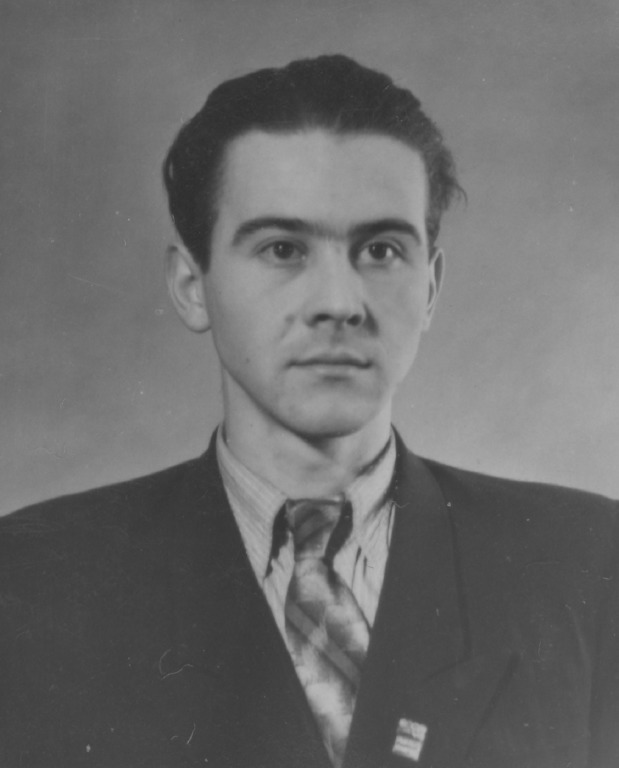
 

A.S.: - Mr. Remenco, your are one of the few people that still remember Chisinau as it once was...I think of a history of Chisinau told by those who were born here, who lived through history...

- You should talk to Mr. Ion Lisnic and Boris Diacenco, my first trainer on shooting sport. I was eminent in this kind of sport, the laureate of USSR Spartakiad, two editions. There is still information about our family in the media, from the interwar period. But also in the volumes like “Basarabia necunoscută”, “Femei din Moldova” Encyclopaedia. It is true that I have not yet been able to gather the whole history of Remencu-Scodigor family in one book.

- Your daughter, Tatiana, has also confessed to me these days, that she has an archive waiting to be harnessed.

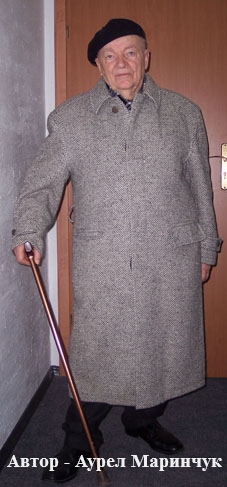
- Tatiana probably could do this. Let’s turn back to my family; you may be interested in my grandfather, Gheorghe Scodigor, my mother’s father, who was descending from a generation of priests. They were known in Chisinau. In a Hebrew newspaper, an article on persecutions of Jews was published, signed by Mr. Marinciuc. He remembers my grandfather because he then baptized the Jews children to left and to right. How to explain, the people then were differentiated in two large groups. So, one group was composed by provincial Bessarabians, and the other group was called “group of conquerors of the Old Kingdom”. Not long ago I met an old woman who remembers the priest...

- After returning from Romania, where did you study, what lyceum?

- In Chisinau, primary school no. 2, located above the republican stadium, on Bender Street. During the war, there was a little church at the corner. Today the University campus is there. More above there is a building. It was the school no. 2. I was eminent at school, I had the average score of 9,33.

- During what period did you study at school no. 2?

- Between 1942-43. Then, in the school year 1943-44, I studied at Hasdeu High School, the building of the current History Museum. It was a very prestigious high school, an extraordinary contest that I passed and, after the first year we all went to Romania.

- After the war started?

- Not when the war started, we left in 44.

- Where did you settle in Romania?

- In Gaiesti, at the northwest of Bucharest, about 70 km far, between Pitesti and Targoviste. That’s where I graduated the second year of high school and passed the external exams for the third grade. My brother remained in Bessarabia, he has been enrolled in the Red Army.

- What was the name of your brother who stayed in the occupied Bessarabia?

- Gheorghe Remenco, in honour of grandfather. He was the President of the Association for protection of historical and cultural monuments, he founded the association. Gheorghe was a fighter. He revived a lot of monuments like Donici’s mansion, it’s my brother’s work. He did a lot of good things. There was an interesting case related to churches. In 1946-47, during the famine, I don’t know how, but some Moldovans came to Moscow to meet Stalin. They didn’t get to Stalin, but their request was sent to the dictator and Kosighin arrived to Chisinau. My brother then was working in ATEM, so he was among those who met the delegation. Kosighin did not make a step through the city, he asked my brother to accompany him through the republic.

- Oh yes, someone told me about that visit of Kosighin. Is it true that the famine was stopped after that visit?

- You know, the situation calmed down. When Kosighin was leaving, he told my brother “if you happen to need me, write me”. So they agreed how to send the letters to reach the Russian official. He used that address only once in his life. In 1960, after a sensible earthquake, many churches suffered serious damages. Ion Gudă categorically prohibited the distribution of any cement for restoration of the churches. Absolutely nothing for churches. My brother then wrote to Kasighin, explaining that the churches make up our national heritage. He received a personal answer: „Nujnîie materialî, vam vîdelenî iz rezerva Soiuza” (“The resources you need are delivered from the Union’s reserve”). After a big scandal, he was called to SS and Ion Vodă cel Cumplit made him a spanking... After that case, Gheorghe didn’t get out of bed... They beat him up badly and...he died quickly. It was his last action. My brother was a great patriot, but the regime defeated him. The times were very complicated.

- Mr. Remenco, I have read somewhere that Florica Nita supported your mother very much in the work of Children’s House from Chisinau, the institution that was the benchmark for the entire country during the interwar period. Sergiu Nita, the husband of Florica, was the representative of Bessarabia in the Romania Government. How were you related to Nita family?

- Sergiu Nita was my grandmother’s brother, on the mother’s side. Sergiu entered the politics at the beginning of the century. He was brilliant in politics; he was graced with King Ferdinand’s friendship! Not everyone could be honoured with such relationships. The King considered him among the best friends. Sergiu and Florica Nita baptized me, so I was named Sergiu in the honour of my uncle. The baptismal certificate has disappeared somewhere through the archive. So, my godfather was about three times the minister of Bessarabia in the Romanian Government, a kind of governor of Bessarabia. Sergiu Nita has great deals under his belt: he was the initiator to lay the Stefan cel Mare Monument, he organised the funding, he made agreements, he negotiated with the sculptor Alexandru Plamadeala... the King Ferdinand was present at the unveiling of the monument. He was personally invited by Sergiu and as long as he stayed in Bessarabia, two or three days, he lived in Nitas’ house.

- Where the house of Sergiu and Florica Nita was located?

- On the Lazo Street, above Ştefan cel Mare, if you lift up, on the right. There’s no house left, they have demolished it. I barely remember him. I was small then. I don’t know my aunt Florica at all. She died in the year I was born.

- Where did have you been baptized, what church?

My grandfather Gheorghe baptized me in the Church “Adormirea Maicii Domnului”. It still exists on the Bulgara Street, the upper part to Mateevici, near Kogalniceanu. My baptism was in 1933! My grandfather was very honoured by parishioners; he was the only priest who officiated at the Divine Liturgy during 1940-41. The soviets came, all the churches were closed and he had a lot of troubles, but he was still doing the service. As much as I remember him, as I had known his deeds, I consider him a Saint. Of course my mum was also a Romanian, she had a special education in the family and she was a great patriot in everything. My grandmother’s name was Nadejda Nita, sister of Sergiu Nita.

- And how did your father, the publicist Dumitru Remencu, arrive to the house of the priest Gheorghe Scodigor?