
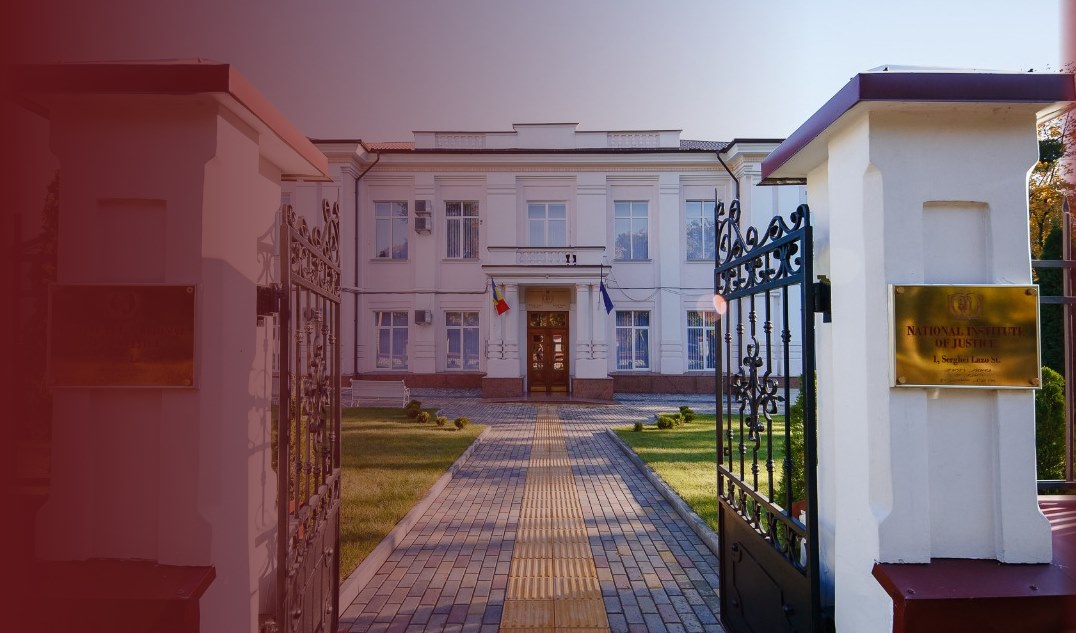
February 2015

Совет НИЮ

Совет является высшим органом управления Института.

Состав:

Совет состоит из 13 членов, в том числе:

  • семи членов, назначенных Высшим советом магистратуры из числа судей судебных инстанций различных уровней;
  • четырех членов, назначенных Генеральным прокурором по предложению Высшего совета прокуроров;
  • одного члена, назначенного Министерством юстиции;
  • одного члена, являющегося  штатным преподавателем права, назначенного Сенатом Государственного университета Молдовы.

Срок полномочий членов Совета составляет четыре года. Одно и то же лицо  может быть назначено членом Совета не более чем на два срока.

Полномочия члена Совета прекращаются по истечении срока мандата, по заявлению или в случае смерти. Член Совета может быть отозван органом, его назначившим, в случае выявления обстоятельств, исключающих возможность исполнения мандата, а также по решению Совета, принятому двумя третями голосов, в случае неисполнения или ненадлежащего исполнения обязанностей.

Председатель Совета избирается тайным голосованием из числа членов Совета на срок полномочий Совета. Председатель Совета может быть отозван по требованию одной трети его членов. Решение об отзыве председателя Совета принимается тайным голосованием двумя третями голосов его членов.

Один член Совета избирается секретарем.

Функции:

Совет осуществляет следующие основные функции:

  • утверждает планы начальной и непрерывной подготовки, а также мероприятия по их выполнению;
  •  утверждает Положение о проведении вступительного конкурса в Институт;
  •  утверждает ежегодно до 1 сентября учебные программы и планы для курсов начальной и непрерывной подготовки;
  •  утверждает Положение о проведении конкурса на замещение преподавательских  должностей;
  • проводит конкурс на замещение преподавательских должностей и утверждает его результаты;
  • проводит конкурс на замещение должности исполнительного директора;
  • назначает на должность и освобождает от должности исполнительного директора и заместителя исполнительного директора;
  • исходя из реальных потребностей и имеющихся средств утверждает количество мест для проведения вступительного конкурса по приему на начальную подготовку кандидатов на должности судьи и прокурора;  
  • рассматривает, утверждает и представляет Министерству финансов в установленном порядке проект бюджета Института;
  •  утверждает договоры о сотрудничестве с аналогичными зарубежными учреждениями и договоры о спонсорстве;
  • утверждает порядок оплаты труда преподавателей, работающих в Институте на непостоянной основе;
  • утверждает состав комиссий по приему вступительных и выпускных экзаменов;
  • проводит вступительный конкурс по приему на начальную подготовку кандидатов на должности судьи и прокурора;
  • утверждает результаты вступительных и выпускных экзаменов;
  • утверждает ежегодный отчет о деятельности Института, представляемый исполнительным директором, и направляет его Высшему совету магистратуры, Генеральной прокуратуре и Министерству юстиции для ознакомления;
  • утверждает штаты и предельную штатную численность  Института;
  • утверждает Положение о внутреннем распорядке Института.

 Совет выполняет и иные функции, вытекающие из настоящего закона.

Для принятия решений по вопросам, предусмотренным  пунктами а) - d), h) и l) части (1), Законa о Национальном институте юстиции, №152 от 08ю06ю2006, согласование с Высшим советом магистратуры, Высшим советом прокуроров и Министерством юстиции обязательно.

Заседания:

Совет созывается на очередные заседания один раз в квартал.

На внеочередные заседания Совет созывается по требованию председателя Совета или одной трети его членов.

Заседаниями Совета руководит председатель Совета. В случае отсутствия председателя на заседании председательствует назначенный им член Совета или, по обстоятельствам, член, избранный из числа участвующих в заседании членов Совета.

Заседания Совета являются правомочными в случае присутствия на них большинства членов.

Исполнительный директор обязан присутствовать на заседаниях Совета и имеет право совещательного голоса.

По требованию председателя Совета или одной трети его членов на заседаниях Совета могут присутствовать представители спонсорских организаций и приглашенные эксперты.

Решения Совета принимаются не менее чем семью голосами и подписываются председателем и секретарем Совета. Решения по учебным программам для судей и для прокуроров принимаются большинством голосов членов Совета, являющихся соответственно судьями и прокурорами.

Заседание Совета оформляется протоколом, который подписывается всеми членами, участвующими в заседании.


 

The Council

The Council is the supreme management body of the National Institute of Justice.

The componence:

The Council has 13 members, as follows:

a) 7 members are appointed by the Supreme Council of Magistrates from the judges acting at various courts;

b) 4 members are appointed by the Supreme Council of Prosecutors from the prosecutors acting at various prosecutor offices;

c) one member is appointed by the Ministry of Justice;

d) one member – university professor of law – is appointed by the Council of University Principles of the Republic of Moldova.

The mandate of the member of the Council is valid for 4 years and may be subject to renewal only once.

The status of the member of the Council terminates upon the expiration of the mandate, upon the request of the member or in case of the death of the member.  The member of the Council may be revoked by the authority which appointed him/her, if there are circumstances demonstrating such member’s impossibility to perform his/her duties, as well as based on a request of the Council to be voted by 2/3 of its members if the Councils considers that the member in question fails to fulfil or fulfils inappropriate his/her duties.

The President of the Council is to be elected, through secrete voting, from the members of the Council, within the duration of his/her mandate. The President of the Council may be revoked upon the request of a 1/3 of the members of the Council. The decision on revocation of the president is to be passed through secret voting with 2/3 of votes of the members of the Council.  

Clerical works of the Council are ensured by the Institute.  

Competences:

1) In the area of organization of the Institute’s activity, the Council has the following key competences:

a) approves the Institute’s development strategy and the action plan for its implementation;

b) approves the Internal Order Regulation and other documents necessary for the good functioning of the Institute;

c) approves the structure, personnel chart of the Institute and its maximum number;

d) organizes the competition for the position of the director of the Institute;

e) appoints and revokes the director and the deputy director of the Institute, as per the provisions of Art. 9;

f) if the position of the director or the deputy director becomes vacant, appoints an intermediary director or the deputy director until the date of appointment of the director or the deputy director, as per the provisions of the law;

g) approves the Statutes of the trainers;

h) approves the results of the competition for the appointment of the trainers;

i) approves and files with the Ministry of Finance the draft of the Institute’s budget;

j) authorizes the cooperation agreements/memorandums and donor agreements entered into with the similar institutions from other countries;

k) annually, by 31 July, approves the report on activity of the Institute, to be submitted with the Superior Council of Magistrates, the Superior Council of Prosecutors and the Ministry of Justice and published on the official webpage of the Institute;

l) approves the Methodology for assessment of the training programs quality.

2) In the area of initial training of the candidates to the positions of a judge or prosecutor, continuous training of the acting judges and prosecutors, court registrars, judicial assistants, heads of court chancelleries, prosecutors’ consultants, probations officers, attorneys involved in state-guaranteed legal assistance, as well as in the area of organization of the exams for the individuals who candidate to the position of the judge or prosecutor based on the duration of their employment service, the Council has the following main competences:

a) annually, by 31 March, taking into account available funds and the proposals submitted by the Superior Council of Magistrates and the Superior Council of Prosecutors, approves, the number of the vacancies to be offered for the competition for admission for the initial training of the candidates for the position of a judge or prosecutor;

b) approves the Regulation on organization and carrying out of the competition for admission for the initial training of the candidates for the position of a judge or prosecutor;

c) approves the componence of the Admission Competition Commission, Final Examination Commission and the Appeals Commission;

d) approves the results of the competition for admission for the initial training of the candidates for the position of a judge or prosecutor and the lists of approved candidates for the initial training;

e) annually, by 1 September, approves the study plan of the initial training and the curricula of the subjects the initial training of the candidates for the position of a judge or prosecutor;

f) approves the results of the final examination of the initial training of the candidates for the position of a judge or prosecutor and the final examination for the individuals who candidate to the positions of the judge or prosecutor based on the duration of their employment service;

g) approves the methodologies for assessment of the needs for the initial and continuous trainings;

h) annually, by 30 November, approves the continuous training study plans;

i) approves the specimen of a diploma for the initial training, continuous training certificate and the certificate confirming the fact that an individual had held the final examination in front of the Commission for the Final Examination of the individuals who candidate to the positions of the judge or prosecutor based on the duration of their employment service;

j) annually, by 30 November, approves the trainers training study plan.

 3. The Council has the following main competences related to the initial and continuous training of other individuals who act in the area of justice:

a) approves the initial and continuous study plans for the individuals who act in the area of justice;

b) approves the Regulation on organization the conditions for carrying out the initial and continuous training of the individuals who act in the area of justice.

4. The Council has other competences provided by the Law on National Institute of Justice.

For the decisions specified at par. (1) item l) and par. (2) items. b), e), h), i) and j) the consultation of the opinion of the Superior Council of Magistrates, the Superior Council of Prosecutors, the Ministry of Justice and the National Council for the State-Guaranteed Legal Assistance is mandatory.

For the decisions specified at par. (2) item. a) the consultation of the opinion of the Superior Council of Magistrates and the Superior Council of Prosecutors is mandatory, while for the decisions specified at par. (3) the consultation of the relevant management bodies of the relevant areas of justice is mandatory.


Meetings:

The Council has ordinary meetings, at least once in a quarter.  

The Council may have extraordinary meetings upon the request of its president or, at least 1/3 of its members. The date, time, place, agenda and the drafts of the documents to be approved at the meeting, together with the other materials should be provided to the members of the Council with, at least 3 days prior to the date of the meeting. In case of extraordinary meetings, these materials should be provided to the members of the Council with, at least one day prior to the date of the meeting.

The chairman of the meetings is the president of the Council. In the absence of the president, the meeting is chaired by a member appointed by the president or a member appointed by the other members, if the case.

The meetings of the Council are public. Upon reasonable request of the president of the Council or at least 5 its members, the Council may decide upon the non-public meeting. The meetings have quorum if attended by the majority of the members of the Council.

The Director of the Institute is entitled to attend the meetings of the Council, not having the voting rights.

Upon the request of the president of the Council or, at least 1/3 of its members, the meetings of the Council may be attended by the representatives of the donor organizations and private experts.

Отчеты

Rapoarte


Методико-педагогическая деятельность

Важнейшую роль в процессе начального и непрерывного обучения, проводимого Национальным институтом юстиции, играет методико-педагогическая деятельность. В соответствии с положениями закона и внутренних нормативных актов, Методико-педагогический и исследовательский отдел обеспечивает менеджмент мероприятий, связанных с методико-педагогической и исследовательской деятельностью в рамках НИЮ, включающей:

  • Организацию и мониторинг методико-педагогического процесса в рамках НИЮ.
  • Разработку куррикулумов, планов начального и непрерывного обучения, а также их внедрение.
  • Предоставление методологической помощи преподавателям в рамках процесса разработки/актуализации и внедрения куррикулумов дисциплин и обучающих материалов, в целях практической и теоретической подготовки слушателей с использованием современных технологий обучения, интерактивных и партисипативных методов, основанных на принципах обучения взрослых.
  • Предоставление методологической помощи и координирование, где необходимо, планов непрерывного обучения, необходимые для выделения основных преследуемых задач, навыков, подлежащих развитию предлагаемой тематикой, методов обучения, которые будут использоваться в достижении поставленных результатов и др.
  • Обеспечение качества методико-преподавательского процесса и разработка критериев оценки качества преподавания преподавателями и самого процесса обучения.
  • Менеджмент деятельности по разработке и использованию необходимых методико-преподавательских документов и материалов, разработке учебников/пособий по курсам, методических пособий/руководств и, где применимо, планирование их издания, а также других дидактических материалов, необходимых для процесса преподавания и обучения.
  • Отбор коллекций книг, литературы, документов, в соответствии с профилем библиотеки и нуждами бенефициаров Института, а также обеспечение Института дидактическими материалами, необходимыми для процесса начального и непрерывного обучения.
  • Проведение обучения в области теории и судебной практики, в зависимости от эволюции судебной системы и необходимости обеспечения адекватной методологической поддержки такому обучению.
  • Разработку и внедрение методологий оценки нужд обучения и качества программ обучения, периодической оценки показателей деятельности преподавателей, предоставление методологического содействия процессу оценки.
  • Определение нужд обучения слушателей/бенефициаров начального и непрерывного обучения в рамках НИЮ, с учетом эволюции законодательной базы и соответствующей судебной практики, институциональных реформ, предусмотренных стратегическими национальными и внутренними документами и планами по их внедрению, тенденциями правовой гармонизации на европейском уровне.
  • Составление отчетов/информации, содержащих общие рекомендации по улучшению программ начального и непрерывного обучения, куррикулумов дисциплин.
  • Участие в разработке стратегий НИЮ, составления проектов по внесению изменений/дополнений во внутренние документы Института, согласование проектов законов и нормативных актов, направленных в Институт, участие в комиссиях и рабочих группах, относящихся сферам деятельности Института.

Didactics and Methodological Activity

An important role in the initial and continuous training performed by the National Institute of Justice has its didactics and methodological activity. As per the provisions of the law and internal rules, the Didactics, Methodological and Research Section ensures the management of all relevant didactical, methodological and research activities within the NIJ, including:

  • Organization and monitoring of the didactics and methodological processes within the NIJ.
  • Drafting of curriculums, initial and continuous training study plans and their implementation.
  • Methodological assistance and support to the trainers necessary for realization/update and implementation of the disciplinary curriculums and study materials designed for practical and theoretical training of beneficiaries made through modern didactical technologies, interactive and participative methods based on the principles of adult learning.
  • Methodological support, coordination, if the case, of the continuous training agendas necessary for supervision of general objectives of learning, competences to be developed through studies, study methods to be use and others.
  • Assurance of the highest quality of didactics and methodological processes and drafting of the assessment criteria necessary to assess the quality of studies offered by trainers and, generally, the study process.
  • Management of the activities of drafting and use of necessary study, didactics and methodological materials, drafting books/guides, methodological guides and, if the case, planning of their publishing together with other didactics and study materials.
  • Selection of the books, literature, documents, compliant with the profile of the library and the needs of the Institute’s beneficiaries, and assurance of the Institute with the materials necessary for the initial and continuous training.
  • Research in the area of court practice and theory, depending on the evolution of the judicial reform and the necessity to draft the appropriate methodological support for such reform implementation.
  • Drafting and implementation of assessment methodologies necessary for training and the quality of training programs, periodical assessment of the trainers’ performances, methodological support to the assessment technologies.
  • Identification of the training needs of the students/beneficiaries of the initial and continuous trainings, taking into account the evolution of the legal framework and relevant court practice and the institutional reformation, as per the provisions of the national and internal strategies and the action plans for their implementation, as well as legal harmonization trends on the European level.
  • Drafting reports/information containing general recommendations necessary for the improvement of the initial and continuous training programs and the disciplinary curriculums.
  • Participation in the process of drafting of the NIJ’s strategies, drafting of amendments/supplements to the internal documents of the Institute, approvals for the draft laws and secondary legislation filed with the Institute, participation in various commissions and working groups relevant to the area of its activity.

E-learning

Русский

e-Learning

E-learning, also known as electronic learning represents acquiring of knowledge through digital and electronic means, thus ensuring offering information, supervision of the study process and communication between the students and trainers. The e-learning study courses offered by the National Institute of Justice are properly certified. Each beneficiary of the Institute may apply for the available study courses under the terms and conditions periodically published by the Institute.

E-learning offers a series of benefits:

English